
Validate exploitable risk across internal networks, external assets, cloud, web applications and APIs on one platform. Prioritize remediation based on proven attack paths, then revalidate fixes to confirm the exposure is closed.
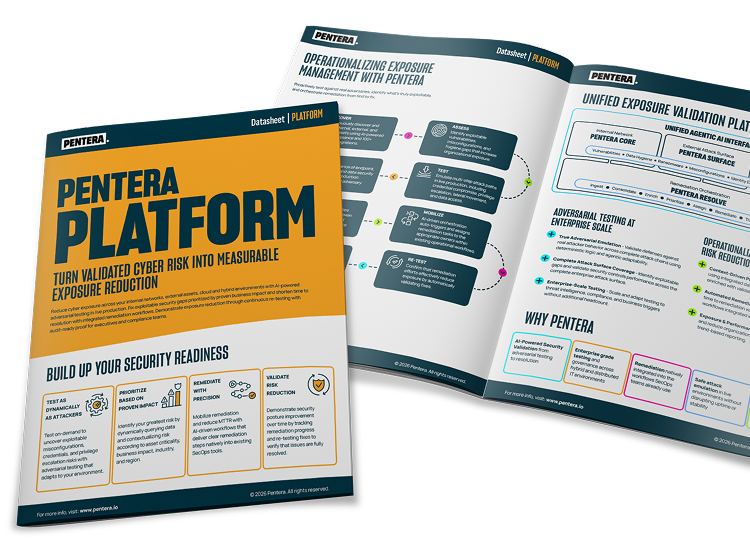
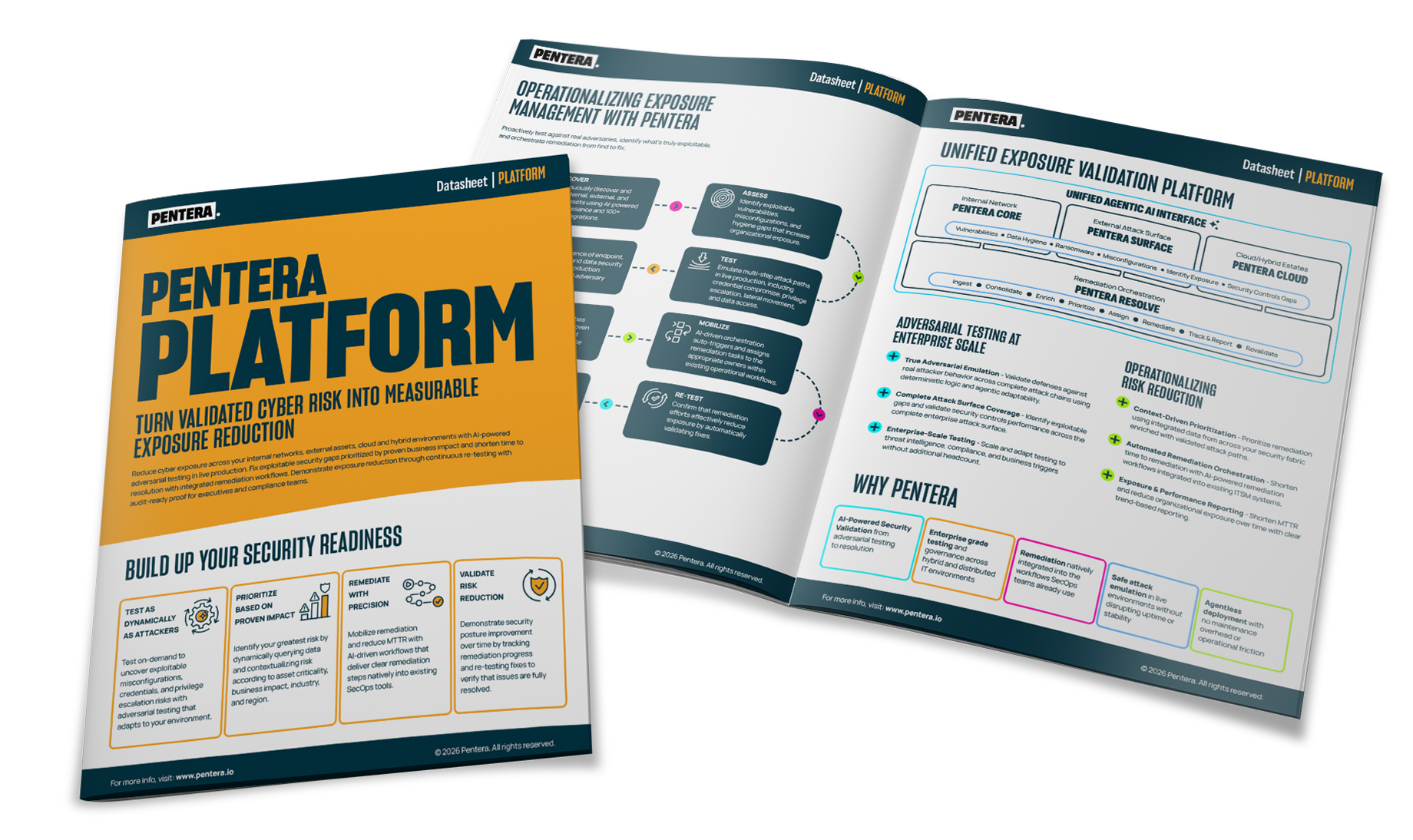
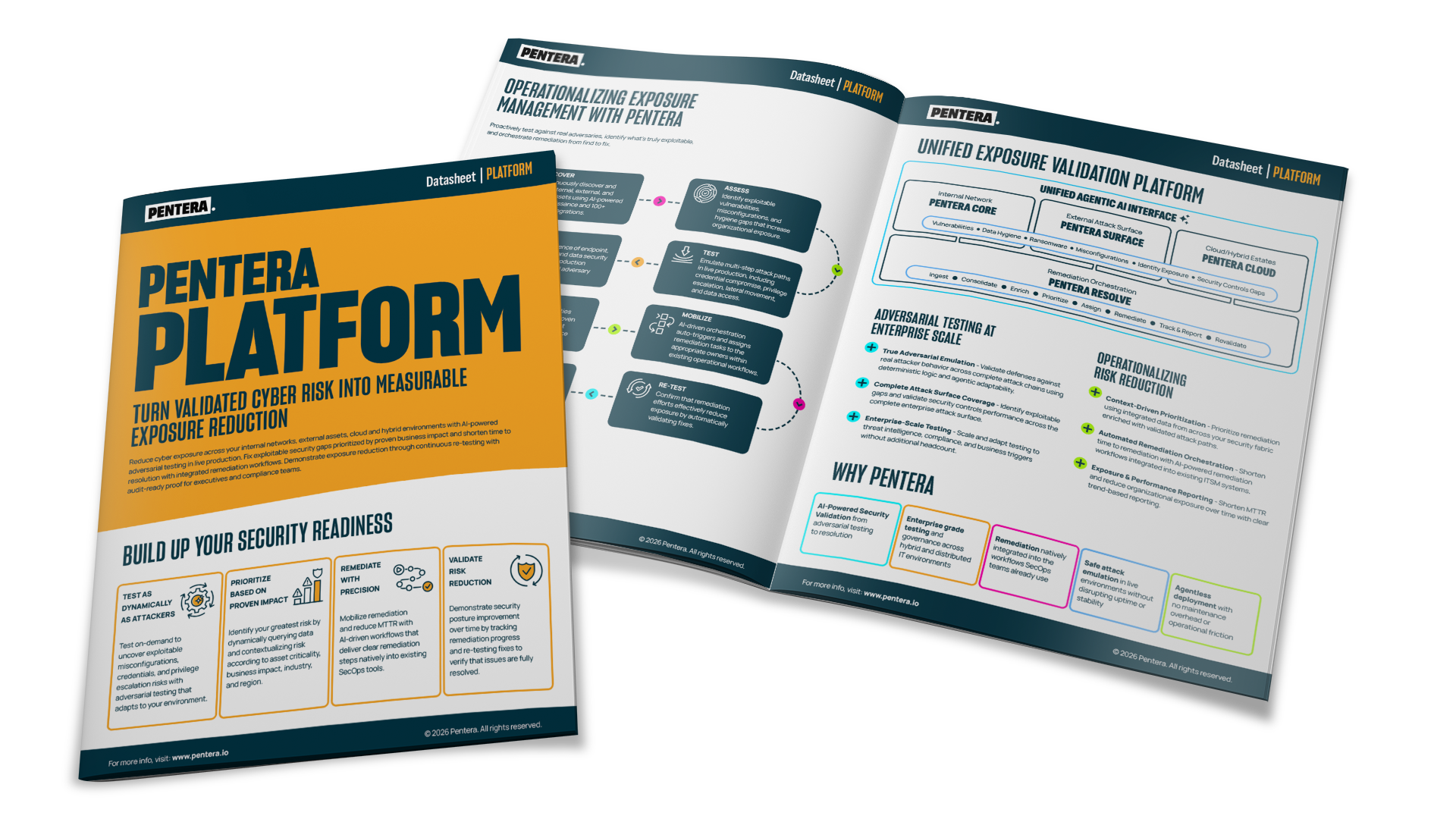
The Pentera platform automates exposure validation from find to fix. Proven attack paths uncovered by Core, Surface, Cloud and Apps flow directly into Resolve for prioritization, remediation orchestration and revalidation. Instead of disconnected workflows, your most critical exposures are assigned, tracked and revalidated after remediation, all within a single platform.
Embedded across the Pentera platform, AI shapes how teams investigate findings, how attacks and payloads adapt to environmental context, and how validated evidence informs prioritization, remediation and revalidation. Execution controls keep testing within customer-defined scope and policies.
Combine deterministic attack logic with agentic adaptability to adjust adversarial testing as identities, permissions, and configurations evolve.
Engage the platform in natural language to explore validated attack paths, query findings, and approve or stop execution within defined guardrails.
Pentera Apps uses specialist AI agents to test application workflows, business logic and access controls. The Validation Grid™ provides environmental context, a purpose-built harness controls execution, and deterministic checks confirm exploitability before findings are reported.
Pentera’s proprietary Validation Grid™ combines an intelligence data layer and execution harness. It brings together asset profiles, validated security findings, threat actor techniques, cross-stack signals and customer-provided context to direct production-safe AI agents toward exploitable attack paths with the greatest business risk.
Aggregate validated attack findings across test runs to uncover exposure trends, detect regressions, and quantify reduction in attacker reach.
Pentera applies a security-first AI governance framework aligned with ISO/IEC 42001 to maintain customer ownership, confidentiality, and integrity. Data is protected through hashing and encryption, with processing conducted in controlled environments. For Pentera Apps, enterprise model-provider agreements guarantee zero retention and no training on customer data. Customer data is processed and stored in the assigned EU or US region, with deletion available on request.
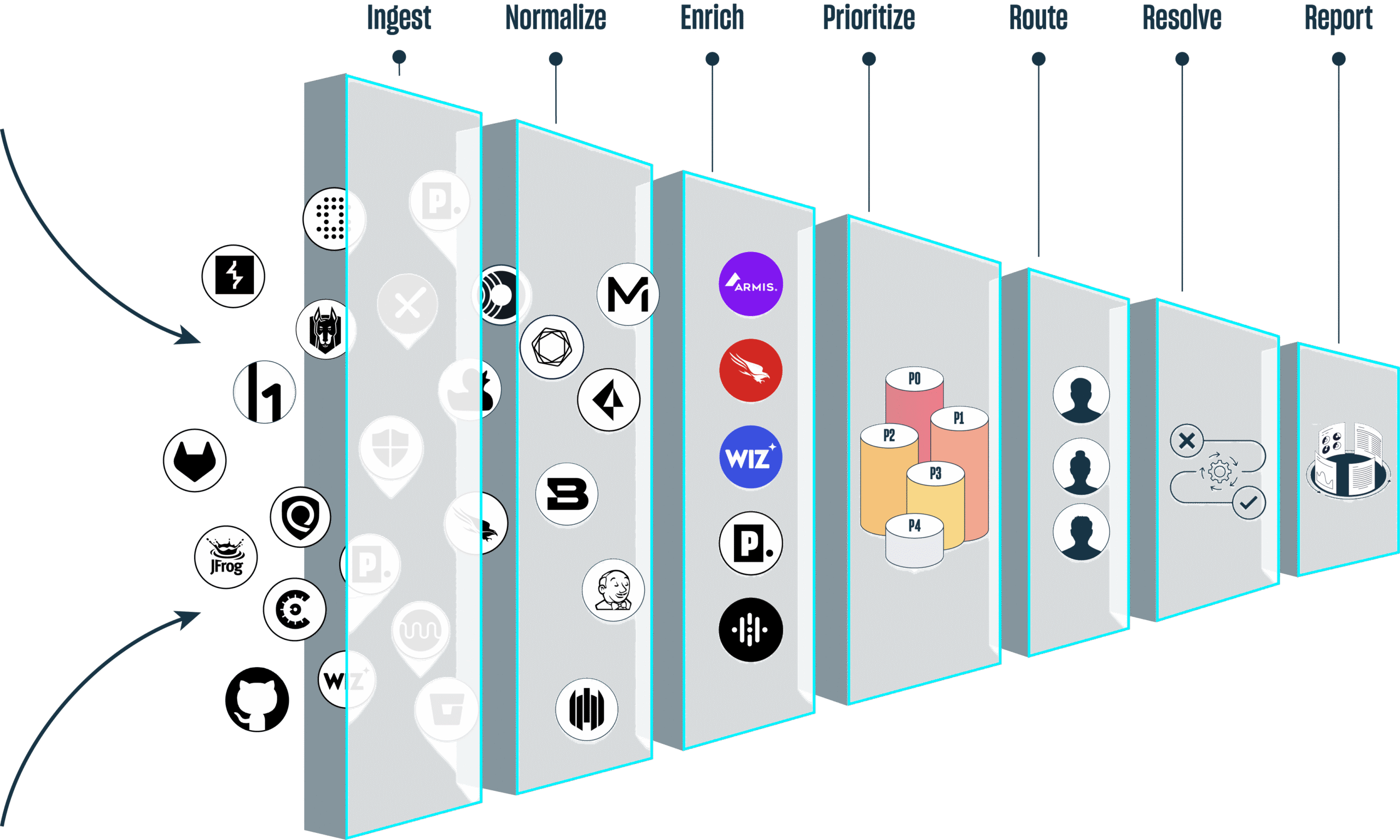
Aggregate validated security findings from Pentera Core, Surface, Cloud and Apps, along with alerts from your wider security stack, into a single, unified view.
Consolidate duplicate alerts to remove redundancy and reduce remediation noise.
Add proven attack context, affected assets, identities, ownership, and privilege scope, to provide the clarity needed for precise prioritization.
Prioritize based on proven risk, business impact, and SLA requirements. Move from severity-based prioritization to evidence-backed decision-making.
Automatically create tickets and route them to the right owners within their preferred workflows, with full context to drive action and track resolution.
Validate that the fix worked by re-testing and generate audit-ready proof of resolution for executives and compliance.
Pentera supports every phase of the Continuous Threat Exposure Management (CTEM) lifecycle. The Pentera Platform proves what is actually exploitable, prioritizes exposure based on validated impact, mobilizes remediation through existing workflows, and revalidates to confirm measurable exposure reduction over time.
Pentera is the unified source of truth for security exposure, integrating across tools, teams, and environments to deliver a validated view of your organizational risk.
Pentera strengthens compliance programs by validating security controls against real attack scenarios and documenting control performance across environments. The Pentera platform delivers clear, evidence-based reporting in support of regulatory and framework requirements.
Pentera transforms validated attack execution into actionable intelligence for every security function. From executives tracking exposure trends to practitioners validating controls and remediation, a single source of validated attack evidence aligns teams around real, proven risk.
Yes. The Pentera platform is designed to operate in live production environments using customer-controlled guardrails. These include attack throttling, customer-defined impact limits, emergency stop controls, read-only testing modes where required, and full audit logs for every test action. Customers retain control over when and how testing runs.
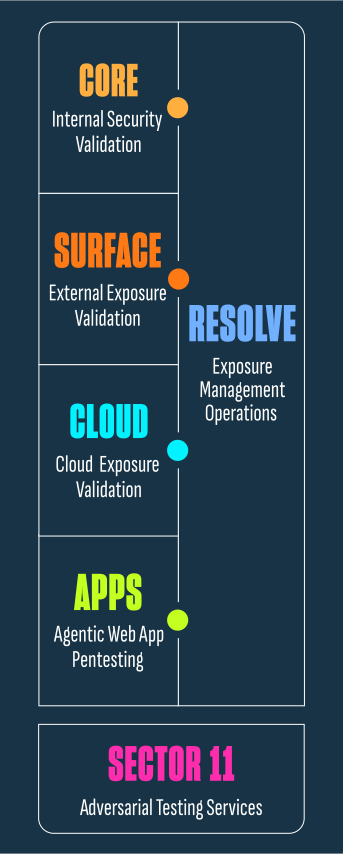
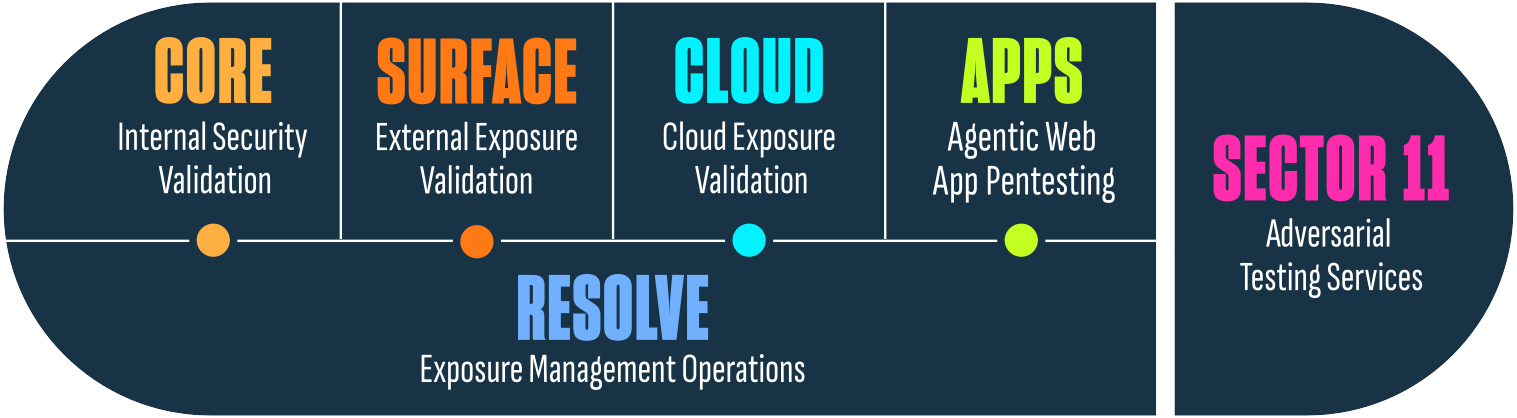
Pentera validates internal networks with Core, internet-facing assets with Surface, cloud environments with Cloud, and web applications, APIs and business logic with Apps. Customers define testing scope and timing. Resolve brings validated findings into remediation workflows and triggers revalidation after fixes.
Pentera Resolve supports remediation operations managed by security teams. Results from attack runs are consolidated, prioritized by exploitability, assigned for remediation through existing workflows, and revalidated after fixes are applied.
No. Continuous Threat Exposure Management is a program framework. The Pentera platform supports CTEM by providing continuous adversarial validation that proves which exposures are exploitable and whether remediation reduces real attack paths.
Pentera combines AI reasoning with controlled attack execution. For application testing, the Validation Grid™ provides environmental context to specialist agents. A purpose-built harness enforces testing policies, and deterministic checks confirm exploitability before findings are reported. Customers control testing scope and execution policies.