

























Imagine a soccer team that can pick which match to show up to, doesn’t play defense, and only needs to score once to win. Odds sound good. Don’t they? For years, this has been the cyber attackers’ playing field. No chance we’re keeping things as usual. Time to change the rules!
The opposing team got stronger
With the increased use of AI Models in attacks and the looming, ever-growing frontier models, it seems like the asymmetry in favor of attackers is just getting worse. The time-to-exploit is shrinking, and the ability to chain and weaponize once-negligible vulnerabilities into critical breaches is making traditional security practices and pentests too slow and obsolete.
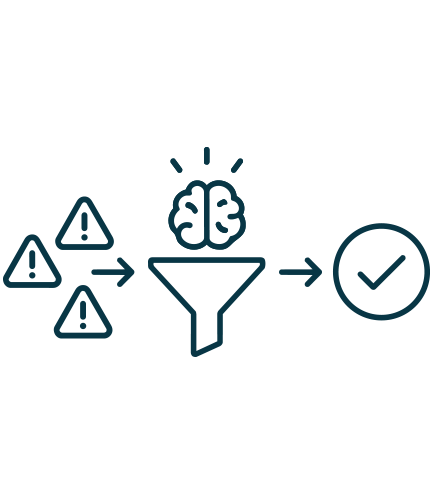
When we consider the new vibe-coded attack surfaces, agent-set configurations, and additional unclear permissions within our tech stack, the game is at risk of shifting even further in favor of the attackers. Attackers also share knowledge and tools, so now, little league players suddenly hit like pros. Security teams are working harder than ever and still falling behind, burdened by alert fatigue, impossible triage, and the inability to answer the question “are we vulnerable to that latest attack?”
Seizing the unfair advantage
Pentera is changing the rules by shifting the advantage to the defender. First, there are the frontier LLM models. These models are available to anyone, friend or foe, so we use them extensively for security validation and to learn and improve over time. We are well-positioned to do so, being part of Anthropic’s Cyber Verification Program and OpenAI’s Trusted Access for Cyber.
Second, through the move to continuous validation. Long gone are the days of point-in-time snapshot pentests; that are irrelevant the moment the reports are produced. An attack can happen at any time, and it will not wait for the slow cadence of the pentest report. Continuous validation means having a handle on your security posture at all times, following every infrastructure change, new feature, version push, or new deployment. The reason we can do it is the guardrails, the software that wraps the LLM brain and makes sure every test is run safely. The confidence that you can trust continuous validation without anything breaking your production.
Finally and most importantly, is context. While frontier models became commoditized, the biggest differentiator is the starting point. Attackers still need to go through a black box process with minimal knowledge; their players are running the field blindfolded, while we have super vision. Previous runs, knowledge and understanding of the environment, and a head start that shifts the asymmetry in the defenders’ favor. Context is the one piece of the game plan the attacker can never have.
Welcome to the new game
The match between attackers and defenders has always been unfair, and for a long time, the gap only widened. Attackers picked the time, the place, and the method, while defenders scrambled to cover every inch of an expanding field with shrinking teams and growing fatigue.
What changed is not the field, nor the players. What changed is that for the first time, defenders have something the opponent will never have: the home-field advantage of context, the speed of continuous validation, and the intelligence of the same models the attackers use. The whistle hasn’t blown, the game is still on, and for the first time, we are proactive and not playing defense.