

























Attack graphs have become table stakes.
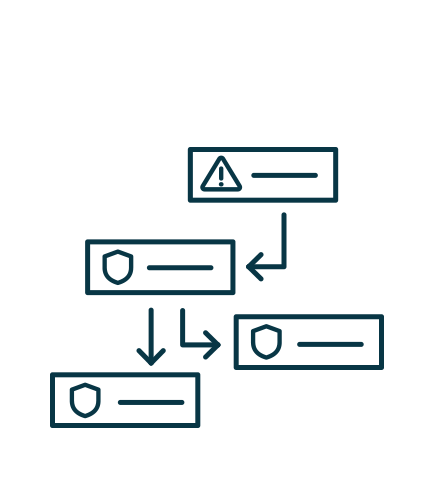
Nearly every modern security platform can render a path from an exposed asset to a crown jewel. The diagrams look similar: nodes, edges, critical systems highlighted, routes calculated. On the surface, they appear interchangeable. They are not.
Some attack graphs are structural. They visualize relationships drawn from CMDB data, identity mappings, network connections, and configuration states. This is a form of passive validation. It uses known relationships, configurations, permissions, and environmental context to model where risk may exist and how an attacker could theoretically move between them.
If one system has access to another, and that system connects to a third, a path can be logically constructed. The sequence makes sense from an architectural perspective. But architectural logic is not the same as validated execution.
A modeled path does not account for segmentation policies that block lateral movement. It does not test whether endpoint controls interrupt execution. It does not confirm whether credentials can actually be abused under current conditions. It shows asset relationships and theoretical possibilities, but not practical attack chains.
Rather than modeling what might happen, active validation safely executes real attack techniques to determine what can happen in the live environment. A validated attack map reflects the results of actual testing, showing where an attacker can gain access, which techniques can be used to move laterally, and how one exposure can lead to impact elsewhere. It replaces inferred connectivity with observed exploitability.
The challenge is that passive and active attack maps can look nearly identical. Both may show connected assets, highlight critical systems, and present a path to impact. The difference is not in the visual structure of the map, but in how the path was created. Passive maps are built from observed data and inferred relationships. Active maps are built from executed attack techniques that validate whether a path is actually exploitable. That distinction cannot be confirmed by the visualization alone.
Validation Is Becoming Central. But What Are We Validating?
With the rise of Continuous Threat Exposure Management (CTEM) and broader exposure management programs, validation has moved to the center of many security conversations.
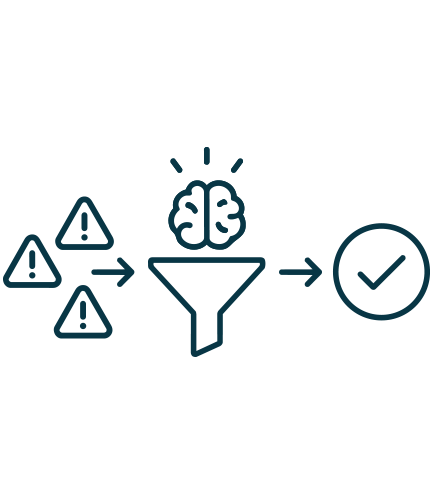
Security leaders are no longer satisfied with knowing where weaknesses exist in their environments. They want to understand which weaknesses practically matter. They want proof of which exposures can be exploited in their specific environment and confirmation that controls perform as intended, or that they don’t. They need to prioritize the most critical flaws and fix them quickly.
As a result, “validation” now appears everywhere. Platforms validate vulnerabilities. They validate configurations. They validate policies. They validate security controls. The term has become shorthand for increased confidence in the criticality or exploitability of an alert.
That makes it important to understand what vendors mean when they say “validation.”
In practice, the difference often comes down to active versus passive validation. While both provide valuable insight, they answer different questions and should not be treated as equivalent.
When a security team is deciding what to remediate first, the difference between a theoretical path based on relationships and inferences versus a demonstrated path based on real attack emulation matters. One identifies potential risk. The other provides evidence of exploitable risk. Treating them as equivalent can lead to very different prioritization decisions.
What Active Validation Looks Like in Practice
Validated attack mapping is not generated from vulnerability or configuration data. It is produced through controlled, live attack execution inside the environment.
Pentera uses both deterministic and agentic AI-based attack algorithms to emulate real attacker behavior. Deterministic execution follows structured tradecraft, carrying out known attack techniques in consistent, repeatable sequences that reflect how adversaries methodically escalate access.
Agentic AI evaluates the environment at a different level. It analyzes unstructured content to identify sensitive information such as PII, applies machine vision to extract data embedded within images, dynamically generates context-appropriate payloads, and assesses how newly uncovered assets or data exposures alter the attack surface. This enables validation to reflect not only how attackers escalate access, but how they interpret and exploit information as they move through an environment, adjusting the attack path based on newly discovered findings.
The result is an attack map that goes beyond inferences and relationship mapping. It’s a proven record of how an attacker can move through your environment today. In this form, the attack map becomes a practical decision tool. Security teams can:
- Identify Exploitable Attacks – Focus remediation on attacks proven exploitable in your environment, mapped to MITRE-aligned techniques, not just those with the highest severity.
- Emulate Remediation Impact – Evaluate whether a fix addresses the root cause to eliminate the kill chain, or if attack progression remains possible.
- Validate Detection and Response – Measure real MTTD and MTTR by correlating attack execution timelines with logs and alerts from security tooling as well as SOC response.
As validation becomes increasingly central to CTEM and exposure management deployments, precision matters. Not all attack graphs are equal, and not every tool claiming “validation” has proven exploitability in your environment. Asset mapping has significant value, but it is not the same as executed validation in purpose or impact.
Pentera’s validated attack mapping is built on demonstrated adversarial behavior, not inferred relationships. In exposure management, confidence does not come from what is theoretically possible. It comes from what has been proven.