


Pentera’s AI-powered exposure validation is built on a decade of adversarial research and real-world validation across 1,000+ enterprise environments. AI gives Pentera’s deterministic attack engine real-time context awareness, so it adapts techniques and finds more ways exposures can be reached and chained. The result is broader, more realistic security testing with the control, repeatability, and production-safe execution Pentera is known for.
As a select partner in OpenAI’s Trusted Access for Cyber (TAC) program with access to GPT-5.5 and one of the early
organizations with access to Anthropic Mythos, Pentera applies frontier-level reasoning to expand technique coverage,
sharpen payload generation, and surface attack paths that general-purpose models miss.
AI guides Pentera’s attack execution in real time, adjusting techniques based on environmental context, generating payloads, and advancing attacks while deterministic controls keep every action safe and repeatable.
Pentera applies AI-driven payload generation, adaptive testing logic, and contextual analysis to web attack surface validation. By reading application structure, inputs, responses, and exposed data, it emulates more relevant web attacks and uncovers how exposures can be reached, misused, or chained.
Adjust attack execution in real time by chaining successful steps, retrying failed attempts with new data, and adapting techniques based on live application behavior.
Generate and refine context-aware payloads based on application structure, inputs, and responses to uncover injection points, validation gaps, and misuse paths.
Extract and interpret structured and unstructured data from forms, APIs, files, and documents to understand application logic, identify sensitive data, and use relevant context to guide attack progression.
Every AI-assisted action is governed by Pentera’s deterministic attack engine, so testing remains safe, repeatable, and auditable while adapting to your environment. No hallucinations and no risk to your systems.
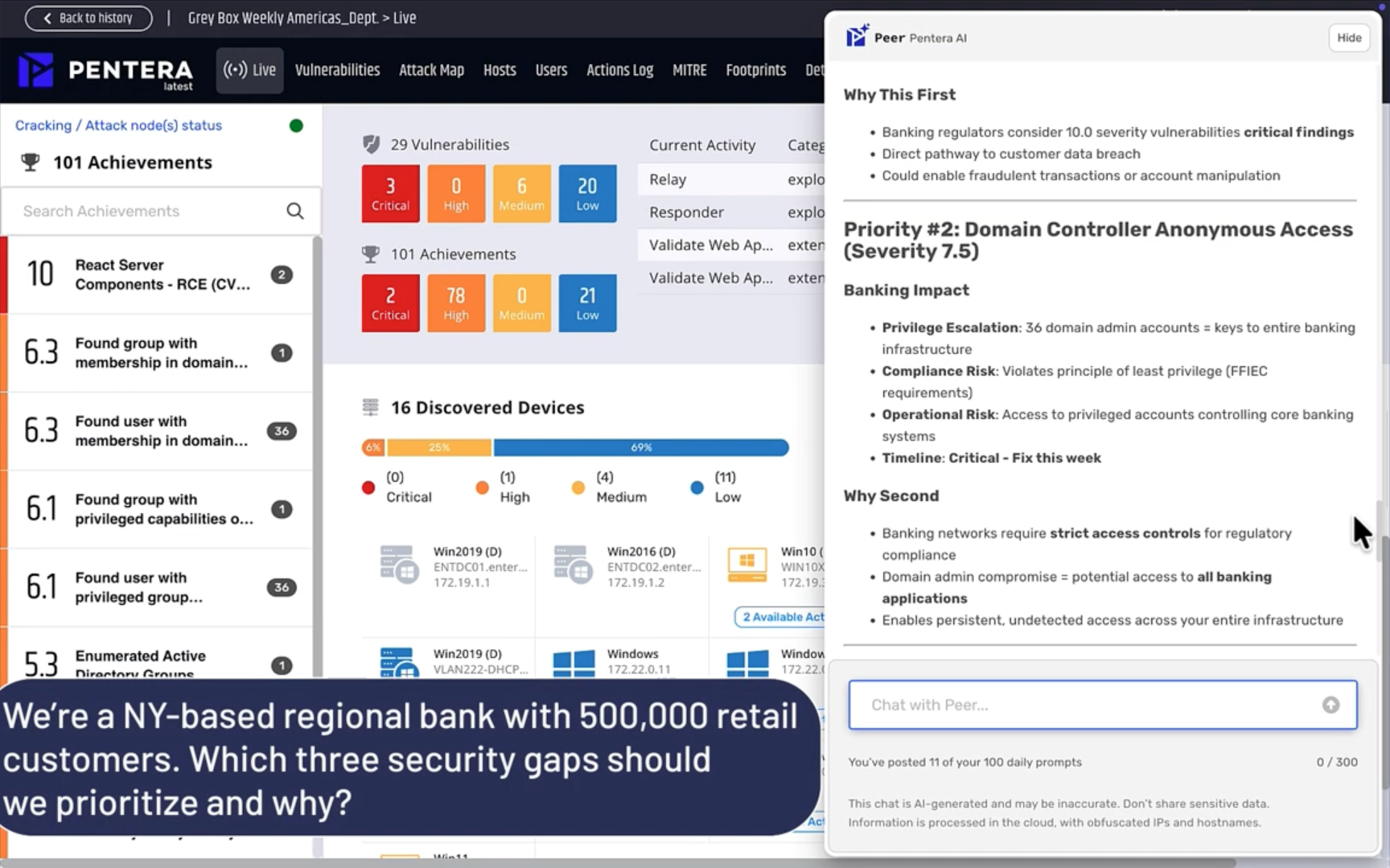
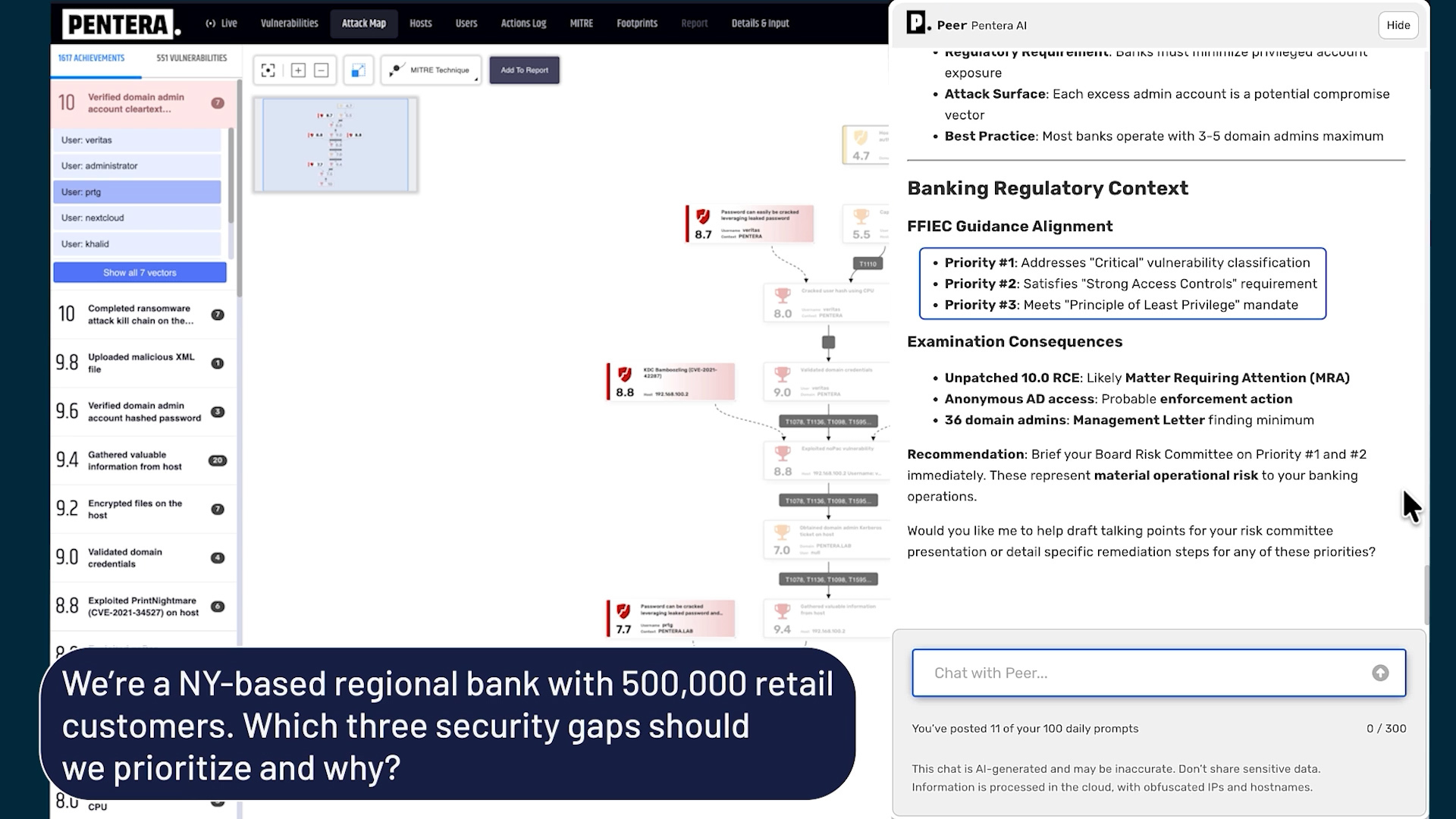
Engage the platform in your own language to query your validated security findings and approve or stop execution within defined guardrails.
Understand exposure as attacks execute, with guidance contextualized to your business, industry, region, and environment. See what was exposed, how it was reached, and which actions reduce risk without waiting for post-test analysis.
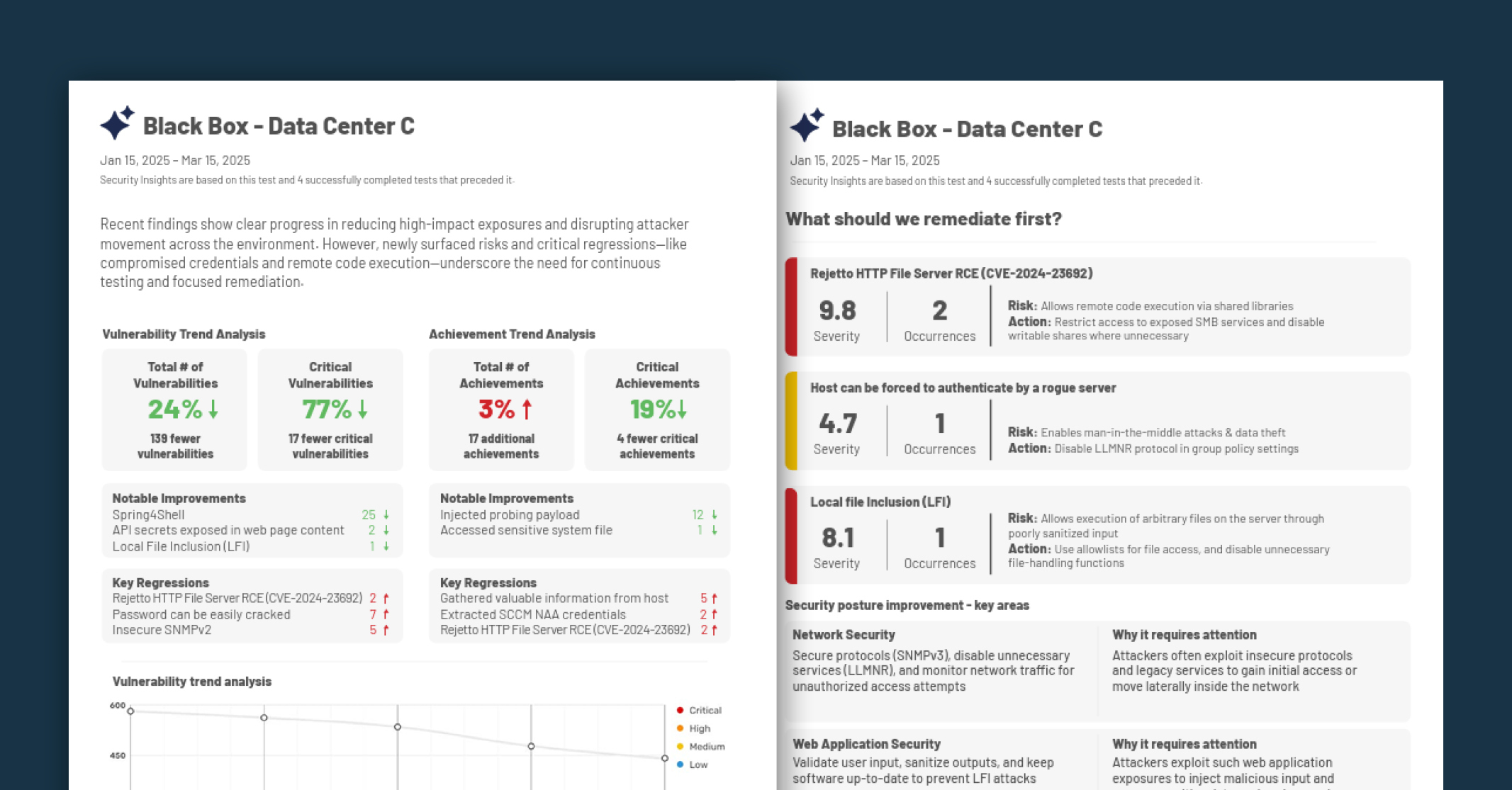
Analyze exposure trends across a defined testing period. Identify recurring vulnerabilities and regressions, measure remediation impact, and understand how organizational exposure is evolving.
Generate reports tailored by role, audience, and language. Deliver executive summaries, technical remediation details, or regional team updates in the format each stakeholder needs.
AI-powered exposure validation continuously tests your attack surface from the attacker’s perspective. It safely confirms which exposures are exploitable, chains them into real attack paths, and prioritizes remediation based on proven risk instead of theoretical severity scores.
Traditional vulnerability scanners identify potential weaknesses based on CVEs, signatures, and configuration checks. AI pentesting and adversarial exposure validation go further: safely testing whether those weaknesses can actually be exploited, chaining vulnerabilities, misconfigurations, and credential exposures into real attack paths, and demonstrating the business impact. The result is continuous security validation based on proven exploitability, not a theoretical list of findings.
Yes. Pentera is designed to safely test production environments. AI helps adapt testing, select relevant techniques, and generate attack logic, while Pentera’s deterministic attack engine keeps every action controlled, repeatable, and auditable. That means security teams can validate real-world attacks without uncontrolled execution that leads to service disruption.
Pentera validates security across the environments attackers target most: internal networks, internet-facing assets, cloud infrastructure, identities, web applications, and APIs. By safely emulating real-world attacks across these environments, Pentera reveals how attackers gain access, move laterally, escalate privileges, and reach critical assets.
After AI-powered exposure validation finds what is exploitable, Pentera Resolve turns that validated attack data into automated remediation workflows, so you know what to fix, who owns it, and whether the fix worked. Pentera Peer adds remediation orchestration, letting teams ask questions in plain language and generate reports for executives and operators.