

Pentera Logo Pentera Logo White
resources
Aug 2026
The Value Problem: What AI cannot decide for us
Pentera Labs Deep Dive - Part 4
Read now
“Pentera helps us prioritize what truly matters and gives us confidence we are covering our global environment continuously.”

“Seeing a domain admin account cracked in production changed how we view internal exposure.”

“Pentera helped us advance our red team and continuously improve penetration testing.”

“Pentera makes it easier to focus on what is truly exploitable instead of chasing long vulnerability lists.”

“In a complex, large-scale environment, Pentera delivers the speed and visibility security teams need.”

“Pentera amplified our team’s performance and delivered measurable value to upper management.”

"Pentera allows us to tailor testing to each service, reduce time and costs, and shift our focus from simply finding vulnerabilities to actively helping our teams fix them.”


Rubén Alonso | Head of Secure
Development Unit, Telefonica

“I don’t think we’d be able to advance our red team without Pentera. If you’re looking to improve penetration testing, I would definitely recommend it.”

Owen Fuller | Cybersecurity Engineering
Manager, Casey’s

Pentera Solutions / Use Cases

AI-Native Automated Threat-Led Penetration Testing (TLPT)

Turn emerging threats into prioritized remediation action
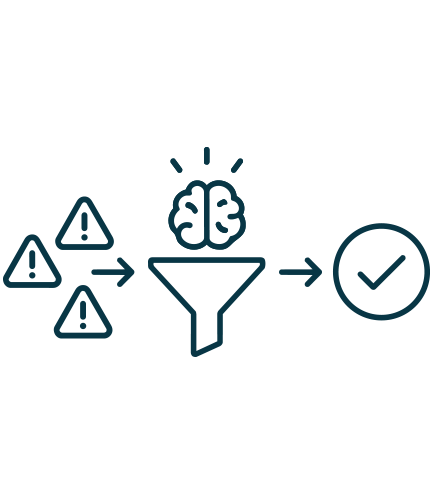
Maximize the value of your threat intelligence by proactively testing your security controls against relevant threats as they emerge. AI-native automated testing removes manual validation limits, validates which threats are exploitable in your environment, respond faster to emerging risk, and focus resources on proven exposure.
Turn threat intelligence into a prioritized remediation list.
Thanks for reaching out! We'll be in touch soon to set up your personalized demo - prepare to unlock security insights about your environment!
TRUSTED CUSTOMERS
Why Threat-Led Penetration Testing?

The benefits of Threat-Led Penetration Testing with Pentera

Proactively validate relevant threats as they emerge, and know which ones matter for your environment. Using Pentera’s AI-driven exposure validation extends security testing across every attack surface, at attacker speed, and turns the feed of threat intelligence into measurable risk reduction.

Turn Emerging Threats Into Immediate Tests

Validate relevant threats as they emerge instead of waiting for the next testing cycle. Keep testing aligned with a threat intelligence landscape that changes continuously.

Scale Beyond Manual Testing

Expand how much threat intelligence your organization can put to the test. AI-driven automation removes the dependency on manual research, scoping, and execution for every validation.

Prove Which Threats Actually Impact You

Test the threats surfaced by your intelligence against your tech environment. See where your defenses hold, where they fail, and which exposures require action.

Test The Complete Attack Surface

Follow threats wherever they lead: from exposed assets and compromised identities to internal networks and cloud environments. Understand how the specific threats could impact your organization.

Integrate Testing With Remediation

Move validated risk directly into natively integrated remediation workflows, so teams spend their time fixing exposures demonstrated to matter rather than working through another backlog of findings.

Prove the Risk Is Gone

Retest after remediation to verify that fixes work and exposure is no longer exploitable, creating a measurable path from threat intelligence to risk reduction.

Report on Threat Elimination

Deliver clear reporting on which threats were exploitable, what was fixed, and the risk your team eliminated.

How it works

From relevant threat intelligence to proven exposure

Bring a prioritized threat signal into Pentera from a supported threat intelligence source. Define the scope, then run a focused adversarial test against the assets and attack paths the threat may affect. Move proven exposures into remediation and rerun the test after the fix to confirm closure.
  • 1. Select the Threat
  • 2. Set the Scope
  • 3. Run the Validation
  • 4. Remediate and Confirm Closure
1. Select the Threat
Choose what requires validation

Select a threat actor, campaign, adversary technique, actively exploited vulnerability, or compromised credential surfaced by a supported threat intelligence source.

2. Set the Scope
Define where the test will run

Identify the assets, identities, and attack surfaces the threat may affect. Set the approved targets, access, and testing boundaries.

3. Run the Validation
Test whether the threat can succeed

Pentera safely executes a focused adversarial test mapped to MITRE ATT&CK® and provides evidence of any exploitable exposure or attack paths.

4. Remediate and Confirm Closure
Prove the fix worked

Route validated exposure into owned remediation workflows with Pentera Resolve. Rerun the test after the fix to confirm the exposure is closed.

Threat-Led Penetration Testing use cases

Put threat intelligence to work across your security program

Apply automated TLPT when new intelligence changes your risk: from an emerging ransomware campaign or actively exploited vulnerability to compromised credentials tied to your organization.

Validate New Threat Intelligence at Scale

Continuously turn relevant intelligence from your threat feeds into focused testing, expanding the threats your team can validate without increasing manual testing resources.

Assess Ransomware Readiness Against Current Tactics

Safely emulate the tactics of leading ransomware groups such as LockBit, Cl0p, BlackCat (ALPHV), Play, and Qilin. Test whether their techniques could succeed in your environment before a real attack does.

Investigate Compromised Credentials

Validate whether credentials surfaced through threat intelligence are still active and exploitable. Safely test whether they can be used to gain access, escalate privileges, or move laterally through your environment.

Determine Your Exposure to an Exploited CVE

When a vulnerability is being actively exploited, go beyond identifying affected assets. Test whether the vulnerability can be exploited in your environment and whether it creates a viable path to greater impact.
Pentera vs Traditional Pentesting

A more scalable approach to Threat-Led Validation

Capability
Frequency
Test Selection
Scalability
Remediation
Revalidation
Pentera Automated TLPT
Triggered or on demand
Driven by current threat-intelligence signals
Repeatable across emerging threats and affected assets
Integrated, owned remediation workflows
Rerun targeted tests to confirm closure
Manual point-in-time testing
Scheduled, point-in-time tests
Defined during a scheduled test cycle
Limited by scope, time, and manual effort
Findings delivered for manual follow-up
Follow-up testing requires additional coordination

Frequently asked questions

Pentera uses current threat intelligence to guide focused adversarial testing. Instead of following a checklist, it validates whether specific threats, vulnerabilities, credentials, and attacker techniques can succeed in your environment.

Pentera takes a signal from a supported threat intelligence source and translates it into a targeted test. It identifies the assets and identities that may be affected, safely validates exploitability, and provides evidence teams can use to prioritize remediation.

Pentera is designed to validate intelligence related to compromised credentials, threat actors, adversary techniques, actively exploited vulnerabilities, and campaigns.

Yes. Pentera executes every test under customer-controlled guardrails, including scoped access, throttling, and emergency stop controls, so validating a live threat doesn’t risk business disruption.

Traditional TLPT is typically delivered as a scheduled engagement. Pentera enables focused and repeatable validation when new threat intelligence requires action, helping teams assess exposure without waiting for the next manual testing cycle.

DORA and TIBER-EU define formal threat-led testing exercises with prescribed roles, scope, methodology, reporting, and remediation requirements. Pentera complements these engagements by helping teams validate threats, prioritize proven exposure, and test fixes between formal exercises.