






















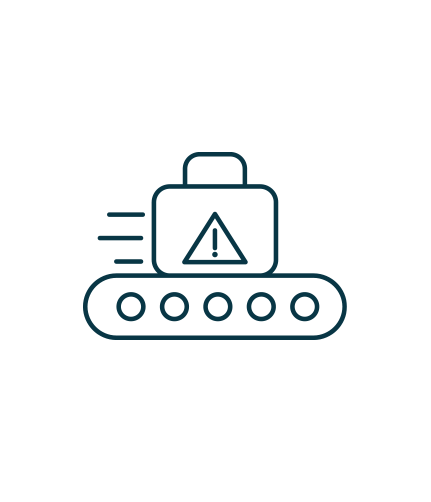

Exposure management used to look a lot like baggage claim. Security teams stood at the belt watching findings pile up: CVEs, misconfigurations, weak credentials, cloud exposures, identity risks. The work was sorting. Which ones belong to us? Which ones matter? Which ones need to be picked up first?
That model is breaking down.
The next phase looks more like air traffic control. The problem is not just volume anymore. It is movement, timing, and collision risk. As attackers use AI to discover, test, and weaponize exposures faster, defenders need a live view of what is becoming dangerous now, which paths attackers can actually take, and whether remediation is moving quickly enough to change the outcome.
A Busier, Faster Airspace
The shift wasn’t caused by more findings. It was caused by faster aircraft. AI-assisted attackers compress every phase of the kill chain: discovery, exploit development, weaponization. Mandiant’s M-Trends 2026 report estimates mean time to exploit at negative seven days. Verizon’s 2025 DBIR puts median time to remediate edge device vulnerabilities at 32 days. That gap used to be uncomfortable. It is now untenable. A month-long remediation cycle isn’t a fix. It is a holding pattern.
This is why prioritization alone, the discipline the industry has spent the last several years refining, no longer carries the program. Knowing which exposure to address first matters less if the response itself is slow, opaque, or unverified.
The Cost of a False Clearance
In air traffic control, a false clearance is the most dangerous thing a controller can issue: telling a pilot the path is safe when it isn’t. Remediation programs issue false clearances all the time. A vendor patch that turns out to be bypassable. A workaround that depends on the attacker behaving a certain way.
These used to be acceptable failure modes because the gap between exploit availability and exploitation was wide enough to absorb a few mistakes. AI has narrowed that gap. The cost of a false clearance now compounds before anyone notices.
Why the Tower Can’t See What It Doesn’t Track
Air traffic control works because every aircraft is tracked continuously, from origin to destination, with every controller working from the same picture. Most remediation programs don’t work that way.
Security can see the exposure when it enters the system. What it often can’t see is what happens after the handoff. Once the ticket moves into engineering’s airspace, it gets pulled into sprint commitments, release schedules, change windows, and whatever else the team was already trying to land.
Building a Tower for Continuous Validation
An air traffic control-grade remediation function needs different machinery than a baggage-claim one.
First, findings need to be traced back to the exposure underneath them, rather than handled as separate symptoms. Six tickets caused by the same misconfigured load balancer should not become six parallel workstreams, each closed neatly while the real issue remains untouched. They should land as one ticket, with one owner and one path to resolution.
Ownership also has to be clear from the start. The work needs to move directly into the systems engineering and DevOps teams already use, without security chasing down who owns what after the fact. Air traffic control does not give a controller a few extra minutes because their queue was full. Remediation operating at attacker speed does not get that luxury either.
And no fix should be marked resolved until it has been validated again. A simple retest only proves that one approach is clear. Revalidation has to look at the underlying risk and confirm that no route leads back to the same exposure.
This is the operating model Pentera Resolve was built for.
How Pentera Resolve Operates the Tower
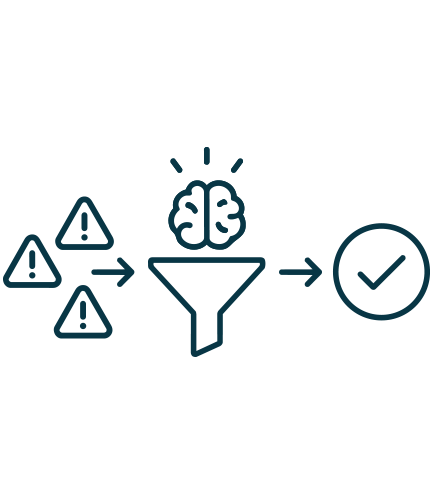
Pentera Resolve acts as the control layer on top of Pentera’s adversarial validation engine. It takes validated exposures, which are the only findings that should be entering the remediation queue in the first place, and moves them through a workflow built for air traffic control, not baggage claim.
It starts by collapsing noise into the real issue. Findings are deduplicated and correlated automatically, so six tickets tied to one underlying problem become one ticket with one owner. Before anything leaves the platform, each finding is enriched with business and asset context. The engineer receiving it knows what they are looking at, why it matters, and what is actually at risk. What looked like scattered blips on the radar becomes a single, usable picture.
Then the work moves to the right controller, inside the tools they already use. Resolve integrates with more than 100 systems, including ServiceNow, Jira, Slack, and the rest of the engineering stack. Ownership is assigned based on context instead of guessed at later. The handoff happens where engineering already works, which makes it much harder for findings to vanish between teams.
SLAs are tracked per finding and tied to escalation paths. They are visible to security and engineering leadership at the same time, from the same picture. The tower has a clock, and everyone can see it.
After a fix is applied, Resolve triggers revalidation against the original exposure to confirm the underlying risk is gone. The result is proof of resolution: audit-ready, evidence-based, and far more honest than a closed ticket. A retest can tell you one path is clear. Revalidation tells you whether the airspace is clear.
That is the loop: validate, remediate, revalidate. The tower works because every aircraft is tracked, every handoff is formal, and every landing is confirmed.
What Changes When the Tower Works
Teams that get this right stop measuring motion and start measuring outcomes. The useful metric is not how many tickets closed last quarter. It is how many exposures were eliminated and verified.
That changes the board conversation. Security leaders can show which risks were real, which were fixed, and which are gone, with evidence behind each claim. It changes the engineering conversation too, because findings arrive as executable work rather than as another vague warning from security.
The industry has spent years building better baggage claim: faster belts, smarter sorting, clearer labels. That work was useful. But it is no longer enough.
The next phase of exposure management belongs to the teams that learn how to run the tower.