
























In a recent feature on The Hacker News, Shawn Baird, Associate Director of Offensive Security & Red Teaming at DTCC, shared how he successfully communicated the Security Validation ROI to senior management and secured funding for an automated security testing platform.
As security budgets expand, organizations are under increasing pressure to justify cybersecurity investments with tangible business outcomes. Security leaders must move beyond compliance-driven security and prove measurable value—demonstrating cost savings, operational efficiency, and risk reduction. Baird outlined key strategies that helped him translate security validation results into financial ROI, gaining executive buy-in for continuous, automated testing.
The Business Case for Security Validation
Baird emphasized that security validation should not be positioned as just another security tool but rather as a business-critical function that enhances efficiency, reduces reliance on third-party services, and strengthens resilience against modern cyber threats.
“At DTCC, we’ve long practiced security validation, but we needed a technology that would amplify our efforts,” Baird explained. Instead of relying solely on expensive, highly skilled engineers to conduct manual validations, automation allowed the team to expand its testing coverage. By implementing an Automated Security Validation platform, DTCC continuously validated security controls, reduced the burden on its red team, and scaled security testing beyond standard penetration tests to uncover real exploitable vulnerabilities rather than theoretical risks.
Justifying ROI: Three Core Areas of Impact
Baird’s team demonstrated measurable Security Validation ROI through increased productivity, cost savings, and risk reduction.
Automating manual security assessments freed engineers to focus on complex threat-hunting tasks while expanding testing frequency without additional headcount. Security engineers spent less time running tests and more time analyzing threats.
Shifting validation in-house also reduced reliance on third-party penetration testing firms. The team repurposed an existing budget from manual pentesting to continuous validation, allowing analysts with less offensive expertise to conduct high-value security tests.
Continuous validation reduces exposure to real-world cyber threats by enabling ongoing testing instead of periodic assessments. DTCC strengthened its ransomware defenses by safely testing real-world attack scenarios. According to IBM’s 2023 Cost of a Data Breach Report, organizations using proactive risk management strategies reduced breach costs by 11%.
Overcoming Internal Roadblocks: Addressing Safety Concerns
One of the key hurdles in deploying an Automated Security Validation platform was gaining approval from DTCC’s architecture review board. The idea of running automated exploits in a production environment initially raised concerns about operational risks.
To address this, the security team took a phased implementation approach. They first conducted limited-scope testing on non-critical systems to demonstrate platform safety. Next, the platform was integrated into red team engagements alongside existing tools to validate effectiveness. Finally, its use was expanded incrementally to critical assets after proving its reliability. By ensuring a structured, risk-managed rollout, DTCC gained organizational confidence in automated testing, paving the way for full-scale adoption.
Budgeting Strategy: Where Security Validation Fits
Securing budget approval required positioning Pentera as part of DTCC’s offensive security strategy, alongside red teaming tools, vulnerability scanners, and breach and attack simulation (BAS) solutions.
A direct cost-benefit analysis revealed that DTCC’s annual spend of $150,000 on ransomware testing was reallocated to continuous security validation. This allowed for more frequent testing at the same cost, expanding testing capabilities without increasing cybersecurity spending.
Beyond ROI: Additional Business Benefits
Baird highlighted several long-term benefits beyond financial ROI. Automating repetitive testing reduced burnout, allowing security engineers to focus on more strategic work. Collaboration between red teams, blue teams, and SOC teams also improved, leading to faster response times.
The shift to continuous validation helped streamline compliance audits by providing readily available validation data for frameworks such as NIST, ISO 27001, and PCI DSS. Additionally, DTCC leveraged Security Validation to lower its cyber insurance premiums, reinforcing the financial benefits of the investment.
Key Takeaways for Security Leaders
For organizations seeking budget approval for Automated Security Validation, Baird recommends focusing on business outcomes rather than just security improvements. Positioning security investments in terms of cost savings, operational efficiency, and risk mitigation resonates more with executive stakeholders. Security leaders should also highlight how continuous testing aligns with compliance requirements and emphasize the risks of inaction, including stolen intellectual property, operational disruptions, and reputational damage.
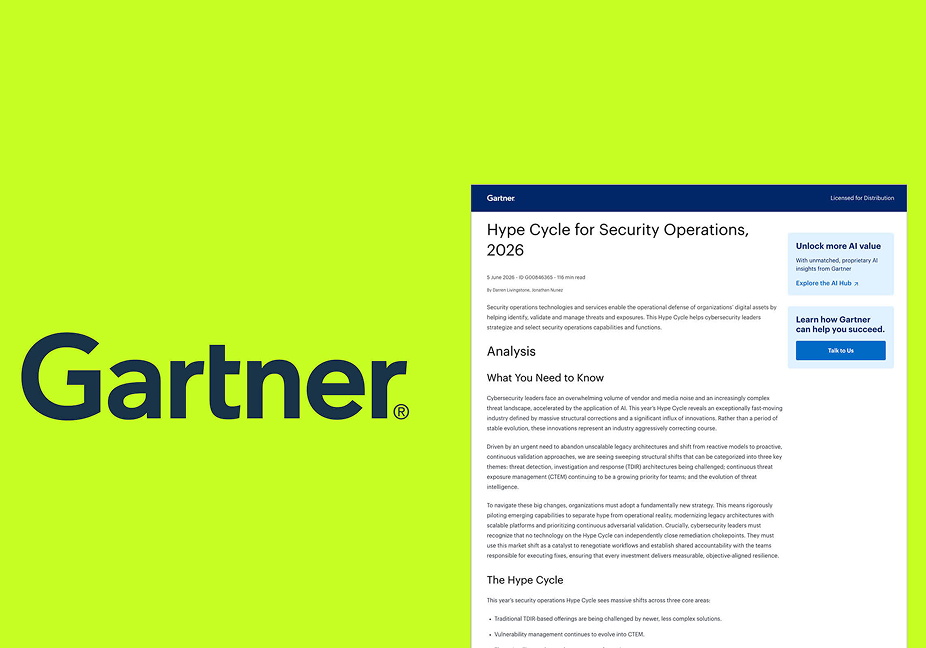
Industry research can help strengthen the business case. Reports such as IBM’s Cost of a Data Breach, Gartner’s Hype Cycle for Security Operations, and the MITRE ATT&CK framework provide valuable insights into the benefits of continuous security validation.
Calculate Your ROI on Security Validation
As organizations face growing scrutiny over cybersecurity budgets, security leaders must prove the business value of their investments. Automated Security Validation offers a data-driven approach to justifying security spend, demonstrating cost reductions, increased operational efficiency, and minimized breach risk.
For DTCC, adopting Pentera’s Security Validation platform resulted in expanded testing without increasing headcount, reduced third-party testing costs, strengthened ransomware defenses through real-world attack simulations, and streamlined audit readiness.
For security leaders looking to build a compelling business case for continuous security validation, Baird’s approach serves as a proven model for securing budget approval and maximizing cybersecurity ROI. Learn more about how you can how prove the Security Validation ROI—cut costs and secure executive buy-in.
Read the original article on The Hacker News here.